DISC describes four broad styles. Most people are a blend, with one or two dominant:
- D — Dominance: direct, results-focused, decisive. Wants the bottom line and the outcome. Be concise and lead with results.
- I — Influence: outgoing, enthusiastic, relationship-oriented. Responds to energy, stories and recognition.
- S — Steadiness: patient, dependable, cooperative. Values trust, stability and a considered pace. Don’t rush them.
- C — Conscientiousness: precise, analytical, quality-focused. Wants detail, evidence and accuracy. Give them the data.
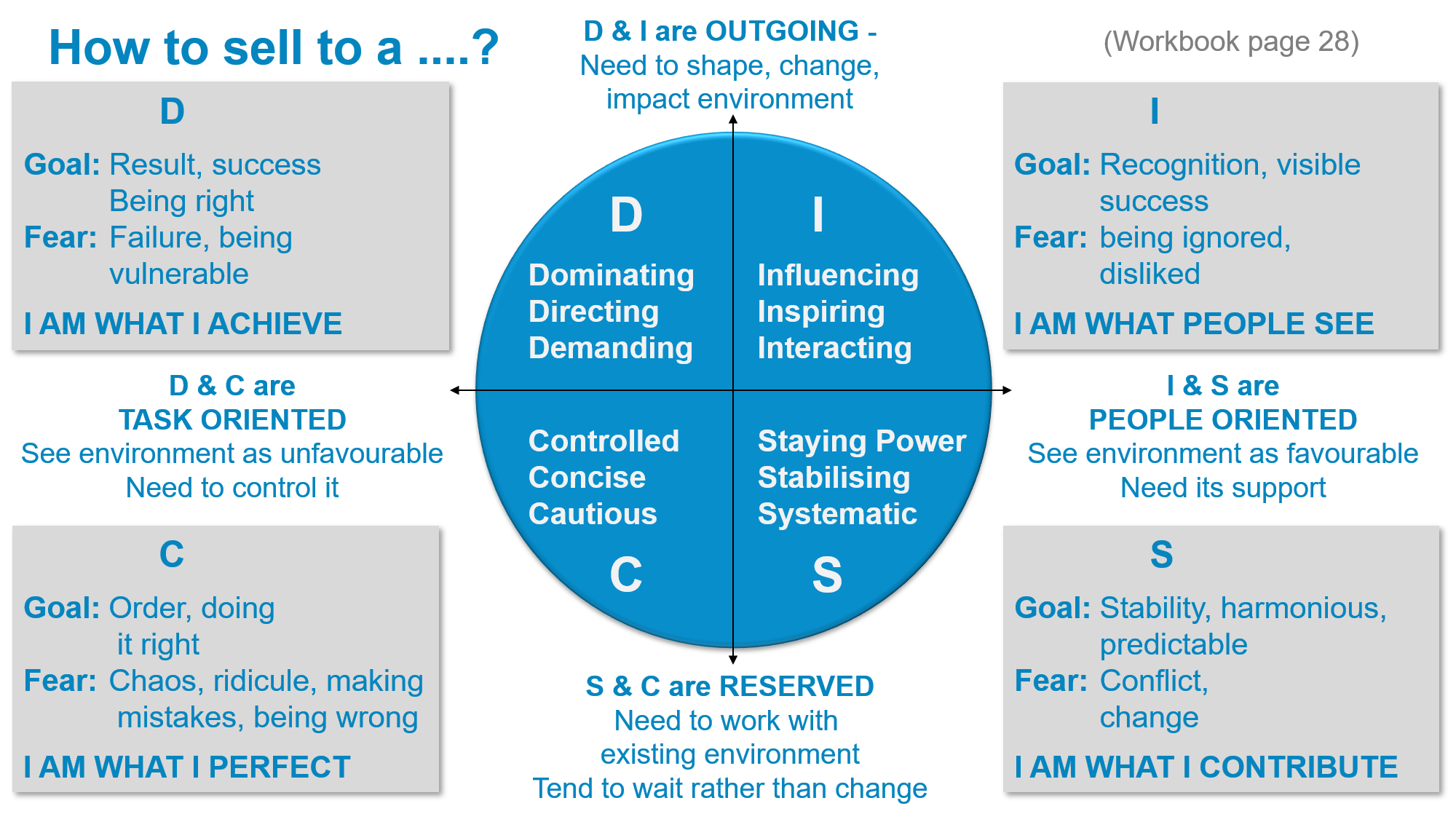
How to sell to each style
Once you have a read on a stakeholder’s dominant style, adapt how you engage them. Select a style below to see how.
How to sell to a ‘D’
D-style buyers like to lead. They want to do what others aren’t, to be the innovator and the pioneer. Sell to that: show them how you will make them more productive, more profitable, more successful, and a leader others follow.
- Respect them, and never make them feel inferior. They need to respect you in return.
- Give them confidence you can deliver exactly what you promise. Lead with facts and reasons.
- Don’t try to be too friendly or matey. That isn’t what wins them.
- Keep features brief. Detail annoys them, so give a short outline that shows the logic of it.
- Tell them plainly how your offering makes them more productive and successful. That is what they want to know.
- Offer better ways to do things, and be blunt if you need to. They won’t mind, provided you have their respect.
How to sell to an ‘I’
To win an I-style buyer, win them over as a friend. If you don’t show that you like them and enjoy their company, they won’t want to buy from you. Bring warmth and humour, and let them see you’re enjoying the conversation. You can be assertive, just not too serious.
- I’s want to do what feels popular. Anything that looks like detailed, time-consuming work will put them off, so if it seems boring to them, show them instead that it will be enjoyable.
- They buy from people who share their nature. Be happy and spontaneous rather than rehearsed, and chat about more than just the sale, at the start, the middle and the end. Expect them to wander off on tangents, and let them.
- Let them do most of the talking. They love to talk, about anything, and especially about other people. Be their friend, and advise them honestly on what you believe is best for them.
- Be sincere above all. I’s are people-people with a sharp read on others, and they will not warm to anyone who seems fake.
- If you are a D yourself, rein it in. Don’t talk too much; let them arrive at wanting it, feeling it is both popular and sensible. You can’t really be too friendly with an I.
- They tend to exaggerate and love a good story. You can use stories to sell to them too, just be honest when you’re exaggerating.
How to sell to an ‘S’
An S-style buyer values steady, considered decisions. They won’t be rushed, they take their time, and they dislike pressure and pushy people. Your job is to be their friend and build genuine rapport. Be reserved and casual, as they are.
- Outline what you’d like them to buy, then back it with detail and data so they can decide, and show them why deciding sooner rather than later is in their interest.
- Don’t expect a quick decision. Set it up early: explain that if you can give them everything they want and expect today, and you both agree it is the best thing for them, you will then outline the steps to get under way. Ask, “is it okay if we do that?” If you can, get them to commit to deciding today, right at the start.
- Accept that an S sometimes won’t decide on the day. It is common, so don’t read it as a no. Give them time, let them know you’ll follow up, and come back the next day. Be firm about wanting a decision soon, but never pushy.
- They don’t like change. Reassure them that your product won’t force major upheaval, that it will fit in smoothly, and that it is a nice steady process.
- Give plenty of eye contact, build rapport, and be their friend.
How to sell to a ‘C’
Selling to a C-style buyer can be challenging. They tend to be sceptical of anyone claiming to have something they need, because they usually feel that what they already have is good. They resist change, having their own way of doing things, and they won’t make a buying decision unless the facts are shown, valid and plentiful.
- Be prepared to spend time with them. They will ask a hundred questions and procrastinate, because their mind is checking whether they have covered every detail. They are cautious of salespeople, largely because they have worked out how to do things without help, and a new system means relearning something they would rather keep doing their own way.
- They aren’t naturally friendly like an I or an S, and you can’t simply tell them they need it, as you might a D. What they want is data. Give them as much as you can, in graphs, tables and written form, whatever suits. You can’t give a C too much to consider; they justify their decisions by logic, and they weigh the facts before anything else.
- Don’t expect a quick decision. They like time to think, so give it to them, and keep the conversation on facts backed by logic. Only follow up on the basis that you have given them everything they need: “I’ve given you all you need to make a decision, so may I call you tomorrow at [time] to see where we’re at?”
- They are confident in their own ability and used to making their own decisions. They talk with confidence because they hold a lot of knowledge and take pride in it.
- Win them by appealing to standards and efficiency. If you show them a way to do what they already do better and more efficiently, you will eventually earn their attention and the sale. Tell them, “you’ll be able to do this even better with what we have.”
Two tools are available. The self-assessment helps you understand your own default style; the customer assessment helps you profile a prospect so you can flex your approach to match theirs.
Download the self-assessment (Excel) Profile your customer →